🌈 Lift to Soften

Updated: Jul 6
Making ART!! Having FUN!!

🌈 Understanding Lifting in Watercolor
One of watercolor's most useful and forgiving techniques is lifting—the ability to remove or lighten paint after it has been applied. Whether you're creating highlights, correcting an area, or adding soft atmospheric effects, lifting allows you to reshape a painting without adding more pigment.
Not every watercolor behaves the same way, however. Some pigments lift easily, while others remain firmly bonded to the paper. Understanding why this happens helps you choose the right colors and techniques for the effects you want to achieve.

What Is Lifting?
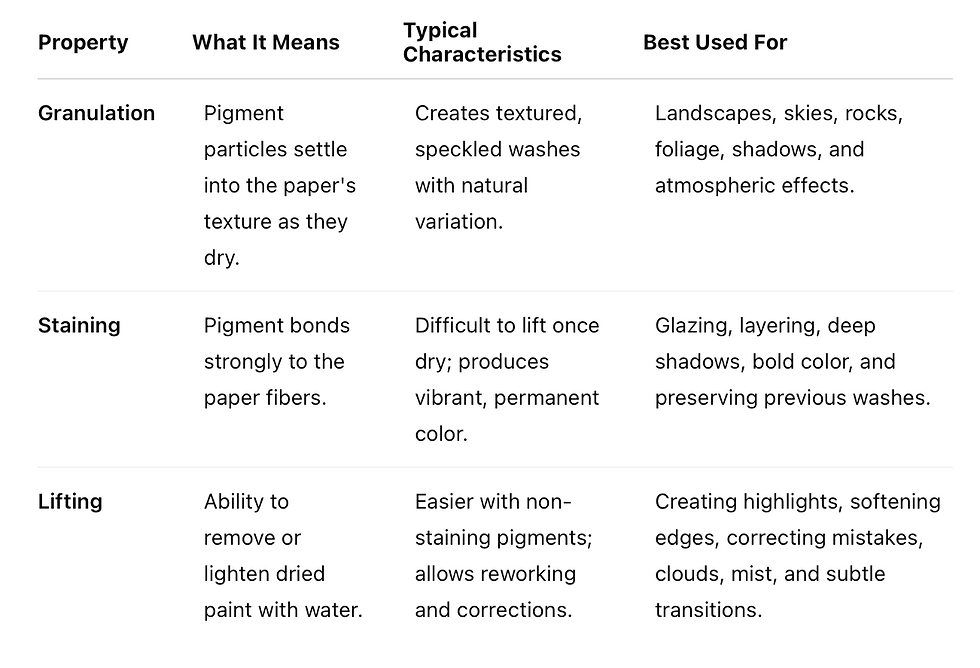
Lifting is the process of removing or lightening watercolor after it has been applied to the paper. It can be done while the paint is still damp or after it has dried, although the results vary depending on the pigment and the paper.
Knowing how your paints respond to lifting allows you to work with greater confidence and control. Lifting is closely related to a pigment's staining strength:
Non-staining pigments generally lift easily.
Highly staining pigments resist lifting.
Semi-staining pigments fall somewhere in between.
Why Do Some Paints Lift More Easily?
The ease of lifting depends largely on how strongly the pigment bonds with the paper fibers. Non-staining pigments tend to remain closer to the paper's surface, making them easier to reactivate with water and remove.
Highly staining pigments, on the other hand, penetrate deeper into the paper and are much more resistant to lifting once dry. Every combination of paper and pigment behaves a little differently, making practice swatches a valuable learning tool. Other factors also influence lifting, including:
The type of watercolor paper
The absorbency of the paper
How long the paint has dried
The amount of water used
How much scrubbing is applied
Why Artists Use Lifting
Lifting is more than a way to fix mistakes—it is an important creative technique that can add depth, light, and atmosphere to a painting. Many watercolor paintings rely on lifting to preserve the freshness and luminosity that make the medium unique. You may use lifting to:
Create highlights
Correct small mistakes
Soften hard edges
Add clouds and mist
Create reflections on water
Suggest sunlight or glowing areas
Build soft atmospheric effects
Common Lifting Techniques
There are several ways to lift watercolor, depending on the effect you want to achieve.
With a Damp Brush
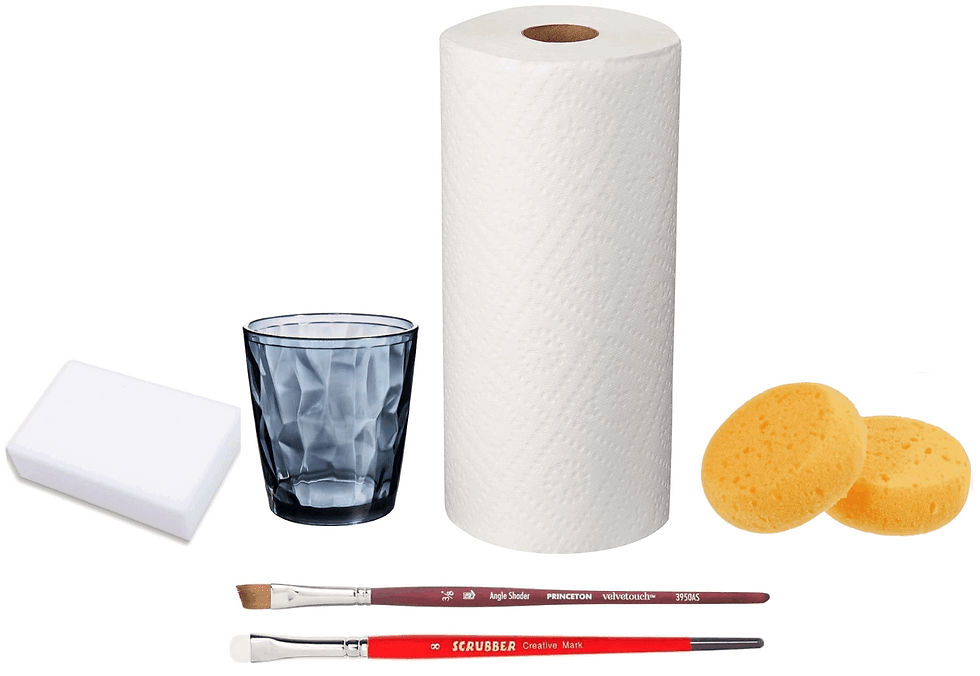
A clean, damp brush is one of the simplest and most controlled ways to lift watercolor. Lightly moisten the painted area, then gently stroke the surface to loosen the pigment. Rinse and blot the brush on a cloth or paper towel after each pass before continuing, preventing the lifted color from being redeposited onto the paper. This technique works well for softening edges, creating subtle highlights, and making small adjustments without disturbing the surrounding wash.
With Tissue or Paper Towel
A tissue or paper towel is an effective tool for lifting paint while it is still wet. Gently press it onto the painted surface to absorb excess water and pigment without rubbing. Depending on how it is folded or crumpled, it can create a variety of natural textures. This technique is ideal for lifting highlights, forming soft clouds, suggesting foliage, creating reflections on water, or adding texture to backgrounds and landscapes.
With a Sponge
A natural or synthetic sponge can be used to lift watercolor from larger areas while creating soft, organic textures. Lightly dampen the sponge and gently dab or blot the painted surface to remove pigment. Natural sea sponges produce irregular, textured patterns, while synthetic sponges create a more uniform effect. This technique is especially useful for suggesting clouds, foliage, rocks, weathered surfaces, or adding texture to backgrounds and landscapes.
With a Scrub Brush (Use Carefully)
A scrub brush is designed with short, stiff bristles that gently loosen dried pigment from the paper. Dampen the area with clean water, then use light, circular motions to lift the color. Blot the area frequently with a tissue or paper towel to remove the released pigment. A scrub brush is especially useful for recovering small highlights, softening edges, or making controlled corrections. Use a gentle touch, as excessive scrubbing can damage the surface of the paper, particularly on softer or lower-quality papers.
With a Magic Eraser (Use Carefully)
A damp melamine foam sponge, often sold as a Magic Eraser, can be used to lift stubborn watercolor stains that are difficult to remove with a brush or standard sponge. Lightly dampen the sponge and gently touch or dab the surface rather than scrubbing aggressively. This method can be effective for lifting strong staining pigments or refining small highlights, but it should always be used with caution. Excessive pressure or repeated rubbing may damage the paper’s surface texture, especially on softer or lower-quality watercolor papers.
Tips for Successful Lifting
Practicing on swatch cards is one of the easiest ways to learn how each pigment responds. For the best results:
Work gently to avoid damaging the paper.
Use clean water and clean tools.
Blot away lifted pigment frequently.
Test unfamiliar pigments before beginning a painting.
Choose quality watercolor paper that can withstand repeated lifting.
Lifting Is a Creative Tool
Many beginners think of lifting as simply a way to fix mistakes, but experienced watercolor artists often plan for it from the start. By intentionally choosing liftable pigments, you can create glowing highlights, subtle transitions, and beautiful atmospheric effects that would be difficult to achieve by painting alone. Understanding which colors lift easily—and which do not—gives you greater flexibility and confidence throughout the painting process.
🌈 Closing Thought
Lifting is one of watercolor's most versatile techniques. Whether you're preserving light, softening edges, or making adjustments as your painting develops, knowing how your pigments respond to lifting gives you greater creative control. Combined with an understanding of granulation and staining, lifting becomes another valuable tool for expressing light, depth, and atmosphere in your watercolor paintings.

Thank you for join us at Coloring Rainbows!
Find us on Substack at https://coloringrainbows.substack.com
Find us on Youtube at https://www.youtube.com/@ColoringRainbows


Learning how to soften or remove paint helps artists have more control over their work. It allows them to experiment, fix mistakes, and create different visual effects. think that creativity and attention to detail are important in all types of design. Just like watercolor techniques help artists improve their work, logo design services in Dubai can help businesses create unique and professional logos that effectively represent their brand identity.