🌈 Choose Pigments Intentionally

Updated: Jul 5
Making ART!! Having FUN!!

🌈 Choosing Watercolor Pigments Intentionally
Once you understand granulation, staining, and lifting, the next step is learning how to choose pigments deliberately rather than relying only on color appearance. Two paints may look similar in the palette but behave very differently on paper, and those differences can dramatically affect your painting process. Learning to select pigments based on behavior—not just hue—gives you more control over texture, layering, and correction.
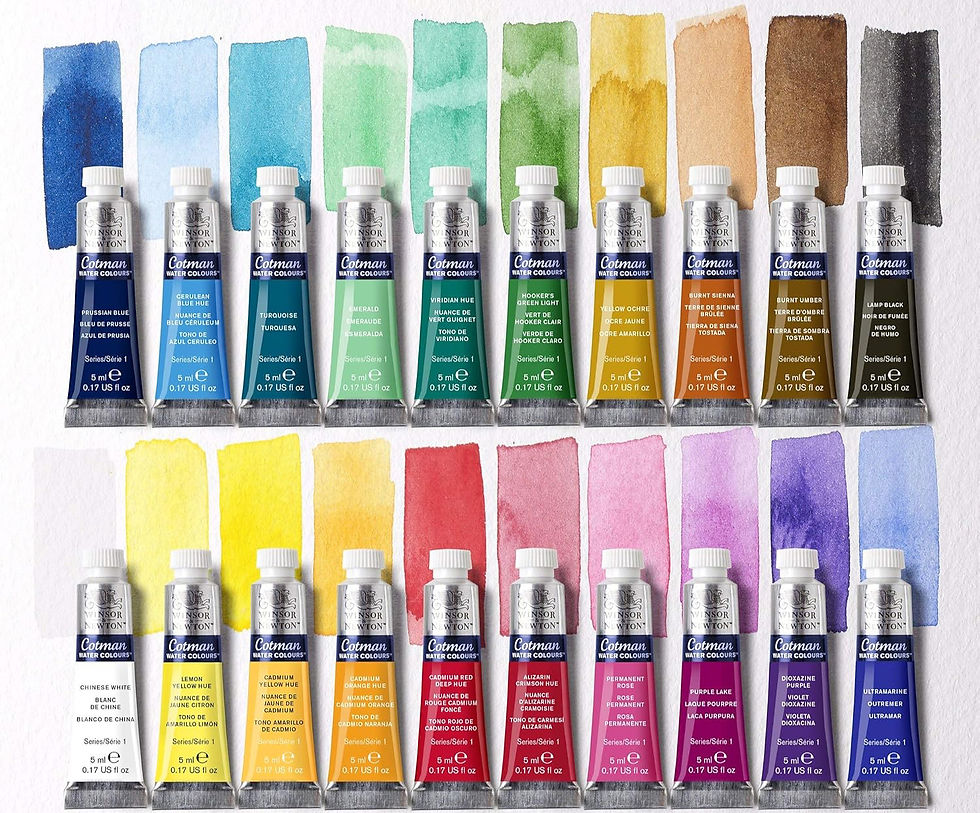
Thinking Beyond Color
In watercolor, color is only one part of the decision. Each pigment also has physical characteristics that influence how it behaves as it dries and interacts with water and paper.
Before choosing a color, it helps to ask:
Does this pigment granulate or stay smooth?
Does it stain strongly or lift easily?
Do I want control and flexibility, or permanence and stability?
Building a Balanced Palette
You will benefit from a mix of different pigment behaviors rather than relying on only one type. A balanced palette gives you flexibility in almost any painting situation. It often includes:
Granulating pigments for texture and atmosphere
Smooth, non-granulating pigments for clean washes
Staining pigments for layering and depth
Non-staining pigments for highlights and corrections
Matching Pigments to Subjects
Different subjects benefit from different pigment behaviors. Choosing pigments with intention helps you support the subject rather than fight against it. For example:
Skies and landscapes often benefit from granulating blues and earth tones.
Botanical subjects often rely on staining pigments for rich, layered color.
Portraits often use non-staining pigments for subtle blending and corrections.
Water and reflections may combine all three behaviors for complexity and realism.
Plan for Layering
If you plan to build multiple layers, staining strength becomes especially important. Highly staining pigments allow you to glaze over earlier washes without disturbing them, while non-staining pigments may lift or shift when rewet. Understanding this ahead of time helps prevent unexpected results and allows smoother workflow during painting.
Plan for Highlights and Corrections
If your painting style involves lifting highlights or adjusting edges, non-staining pigments are essential. These pigments give you flexibility to recover light areas or refine shapes after the paint has dried. In contrast, highly staining pigments are better suited when you want marks to stay exactly where they are.
When to Embrace Unpredictability
Some of the most interesting watercolor effects come from embracing the natural behavior of pigments rather than controlling them completely. Granulation, in particular, often creates unexpected textures that enhance atmosphere and depth. Instead of resisting these effects, many artists learn to guide them and incorporate them into their compositions.
🌈 Closing Thought
Choosing watercolor pigments intentionally is about understanding how color behaves, not just how it looks. When you begin selecting paints based on granulation, staining, and lifting properties, your palette becomes a toolkit of behaviors rather than just colors. This shift gives you greater control, more expressive possibilities, and a deeper connection to the medium.

Thank you for join us at Coloring Rainbows!
Find us on Substack at https://coloringrainbows.substack.com
Find us on Youtube at https://www.youtube.com/@ColoringRainbows

Comments