🌈 Understand Watercolor Paper Types
- Coloring Rainbows
- Jan 16
- 5 min read

Updated: Jun 3
Making ART!! Having FUN!!

🌈 Watercolor Paper: Types, Texture, and Recommendations
When people begin exploring watercolor, most attention naturally goes to paints and brushes. Yet one of the most important materials in the entire process is often the quietest one: the paper itself.
Watercolor paper does far more than simply hold paint. It influences how water spreads, how colors blend, how edges soften, and how layers build over time. The surface beneath your brush shapes the entire painting experience—sometimes in subtle ways, and sometimes dramatically.
Understanding a few basic watercolor paper types can make painting feel smoother, more intuitive, and more enjoyable. It does not remove the spontaneity of watercolor; instead, it gives you a better relationship with the flow of the medium.
At Coloring Rainbows, watercolor is approached as a mindful and exploratory practice. Learning about paper is not about becoming technical or perfect—it is about discovering which surfaces help you feel most comfortable, expressive, and creatively free.
Why Watercolor Paper Matters
Watercolor paper is specially designed to absorb and handle water without quickly tearing, warping, or breaking down. Unlike regular sketch paper or printer paper, watercolor paper is thicker, stronger, and built to support repeated layers of moisture.
The paper you choose affects:
How quickly water absorbs
How smoothly colors blend
How much control you have over details
Whether paint creates soft edges or textured effects
How many layers the paper can tolerate
Even the same paint colors can behave completely differently depending on the paper surface beneath them. For many artists, improving paper quality creates a bigger difference than buying more expensive paints.
Understanding Watercolor Paper Weight
One of the first things you will notice when shopping for watercolor paper is its weight. Weight refers to how thick and durable the paper is.
Common watercolor paper weights include:
190 gsm / 90 lb – lightweight and more likely to buckle (avoid if possible)
300 gsm / 140 lb – the most common and versatile option (use for practicing)
640 gsm / 300 lb – extremely thick and highly durable (use for high quality paintings)
Heavier paper can hold more water without warping. It stays flatter during painting and is generally easier to work with, especially for beginners experimenting with washes and layering.
Lighter paper tends to buckle or ripple when wet, particularly during loose or heavily layered techniques. While it can still be useful for practice or quick studies, it often requires stretching or taping down before use.
For most beginners and hobby artists, 140 lb (300 gsm) paper offers the best balance between durability, affordability, and ease of use. Because it is more forgiving, it allows you to focus less on managing the paper and more on enjoying the painting process itself.
The Three Main Watercolor Paper Textures
Beyond weight, watercolor paper is also categorized by surface texture. The texture changes how paint settles, spreads, and dries. The three primary surfaces are:
Hot Press Paper
Hot press paper has a very smooth surface with minimal texture.
Because of its smoothness, it allows for:
Fine details
Crisp edges
Clean linework
Precise illustrations
It is often preferred by illustrators, botanical artists, and anyone working with detailed brush control. However, hot press paper can feel slightly less absorbent. Water and pigment tend to stay closer to the surface, which may make blending feel less predictable for beginners.
Artists who enjoy structure, detail, and refinement often appreciate hot press surfaces.
Cold Press Paper
Cold press paper is the most commonly used watercolor paper and is often considered the most versatile option. It has a gentle texture that creates a balance between:
Smooth detail work
Natural watercolor movement
Soft blending
Controlled layering
Because of this balance, cold press paper works well for many styles—from loose landscapes to mindful abstract painting.
Cold press paper is often recommended as a comfortable starting point because it supports both structured marks and flowing experimentation. It allows watercolor to behave naturally without becoming difficult to control. For many artists, cold press feels approachable, adaptable, and creatively flexible.
Rough Paper
Rough watercolor paper has a highly textured surface with visible tooth and unevenness. This texture creates:
Strong granulation
Broken color effects
Expressive brush marks
Atmospheric textures
Paint tends to settle into the valleys of the paper, creating dynamic and organic-looking results. Rough paper is often loved by artists who enjoy expressive landscapes, dramatic washes, or highly textured painting styles. While beautiful, rough paper can sometimes feel less predictable for detailed work, especially for beginners still developing brush control.
Artist-Grade vs. Student-Grade Paper
Another important distinction is paper quality.
Artist-Grade Paper
Artist-grade watercolor paper is made from higher-quality fibers, often cotton. It is more durable, more absorbent, and able to handle:
Multiple layers
Heavy water use
Lifting techniques
Reworking areas repeatedly
Colors also tend to appear richer and more luminous on professional-grade paper.
Although more expensive, many artists find that high-quality paper dramatically improves the painting experience.
Some widely respected artist-grade papers include:
Arches — often considered the gold standard for traditional watercolor
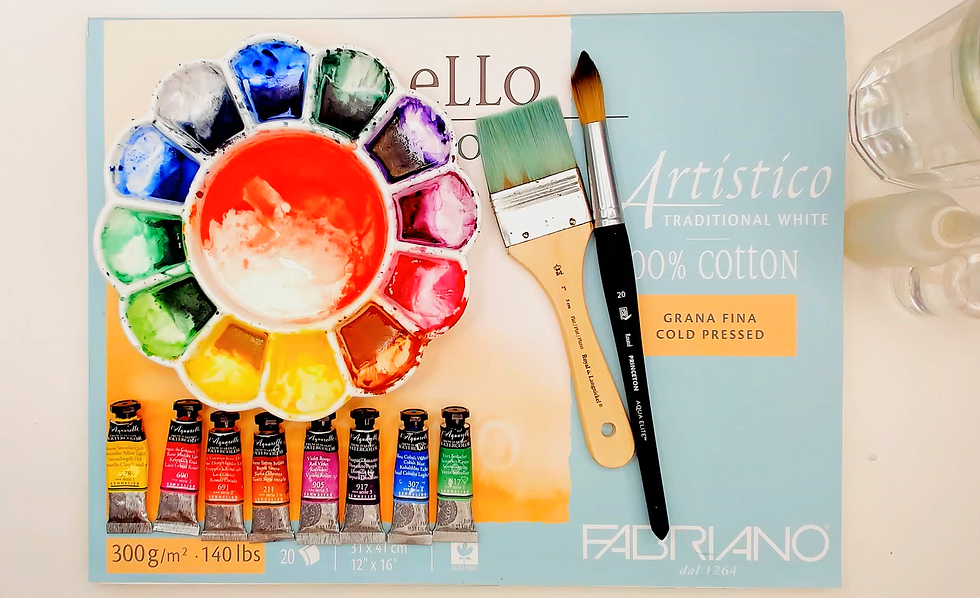
Fabriano Artistico — soft, balanced, and versatile
Saunders Waterford — durable with beautiful texture
Winsor & Newton Professional
Hahnemühle watercolor papers
Legion Stonehenge Aqua
Etchr cotton sketchbooks
Student-Grade Paper
Student-grade paper is more affordable and often made with wood pulp rather than cotton.
It is excellent for:
Practice
Learning techniques
Sketchbook studies
Creative experimentation without pressure
While it may buckle more easily or become damaged after repeated layering, it remains a valuable and accessible starting point. For beginners, using affordable paper consistently is often more helpful than saving expensive paper out of fear of “wasting” it.
Popular beginner-friendly and student-grade papers include:
Canson XL
Strathmore 300 Series watercolor paper
Arteza watercolor pads
Blick Studio watercolor paper
Bee Paper
Paul Rubens cellulose watercolor blocks
Helpful Middle Ground
There are also papers that sit somewhere between student and professional quality. For example:
Cotton-blend papers
Academy or studio lines from professional brands
Affordable cotton sketchbooks
These can offer a smoother transition into artist-grade materials without the full price jump. Examples include:
Baohong cotton watercolor paper
Fabriano Studio
Etchr academy sketchbooks
Finding the Right Paper for Your Style
Choosing watercolor paper is not about discovering a single “perfect” option. Instead, it is about noticing how different papers respond to your personal creative rhythm. Some papers encourage:
Softness and flow
Gentle blending
Loose movement
Others support:
Precision
Fine detail
Strong texture
Bold contrast
Over time, you may naturally gravitate toward surfaces that feel calming, expressive, playful, or grounding. This discovery becomes part of your watercolor journey itself.
Start Here
If you are unsure where to begin, a simple and reliable starting point is:
Cold press watercolor paper
140 lb / 300 gsm weight (or higher)
Artist-grade
Use these recommendations if you:
Want smoother blending and layering
Feel frustrated by paper warping or lifting
Use a lot of water
Want your colors to behave more predictably
Are creating finished pieces
This combination provides enough durability for experimentation while still allowing watercolor to move beautifully across the page. Most importantly, it supports learning without creating unnecessary resistance. The goal is not perfection. The goal is comfort, curiosity, and creative flow.

🌈 Closing Thought
Improving watercolor is not about changing your technique—it is about changing the surface underneath your brush. A paper that handles water gracefully can make the entire experience feel calmer, smoother, and more enjoyable. The best paper is not necessarily the most expensive one. It is the one that supports your creative process with the least resistance.

Thank you for joining us at Coloring Rainbows!
Make ART!! Have FUN!!
Find us on Substack at https://coloringrainbows.substack.com
Find us on Youtube at https://www.youtube.com/@ColoringRainbows
Find supply list on Amazon at https://www.amazon.com/hz/wishlist/ls/3TJJL827SI6L0?ref_=wl_share
However, please shop locally owned, small businesses whenever possible.

Comments